The Artist
Yoko Nakamura (November 8, 1934 – June 24, 2026) was a Japanese painter and junior-high-school art teacher who continued to work until the final years of her life.
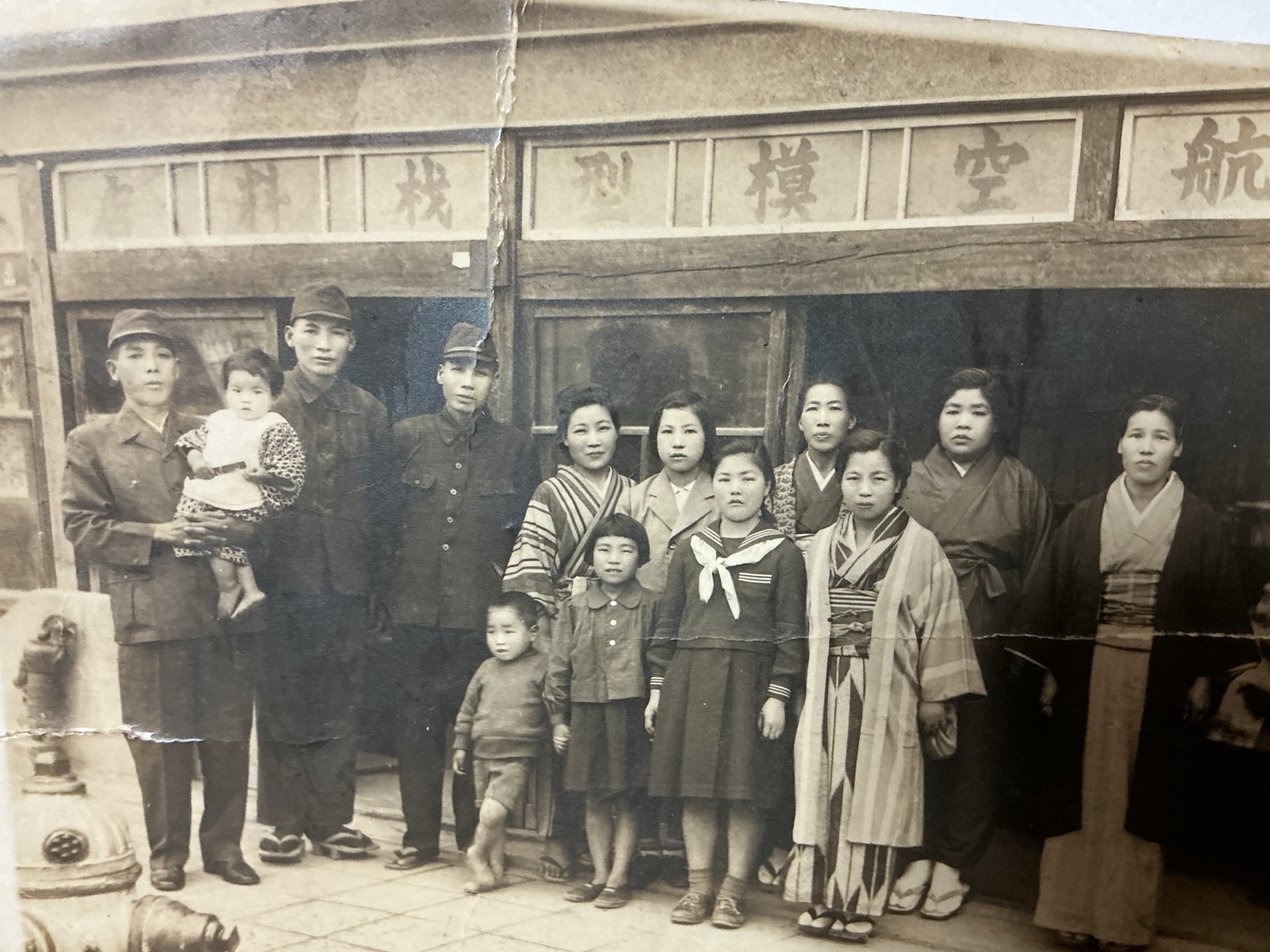
Born into a prosperous family that ran a model-making business, she grew up with craftsmanship, materials and beauty embedded in everyday life. War destroyed the family’s former livelihood, and debt connected to the family home placed a lasting pressure on the postwar years. She nevertheless never relinquished painting.
Alongside teaching, she painted figures, nudes, flowers, still lifes, landscapes, architecture and machinery. Painting was not a quiet leisure activity. It functioned as a conversion system through which vitality and anger accumulated in work and daily life were transferred into colour, weight and form.
Her figures are rarely portraits in the conventional sense. Anatomical accuracy gives way to posture, mass and frontal force; faces may be elongated, emptied of pupils, dissolved into paint or removed altogether. The body becomes a vessel capable of holding heat, dignity, exhaustion and the will to persist.
Colour as a structural force
The powerful circuit of ochre, ultramarine, deep green and red was present from an early stage. Across the work, colour gradually ceases to describe the local appearance of an object and becomes the material that organises the entire surface.
Mandala of Hands and Eyes, dated 1973, already establishes a symbolic language of primary colour, geometry and bodily functions. A Body within the Turning Shell, dated August 2014, integrates body, shell, sea and curved bands into a single circulating structure. These dated works serve as fixed points within an archive in which many other works remain undated.
In works remembered by the family as belonging to the later period, increasingly saturated colour does not simply signal brightness of mood. It acts as a connective system capable of holding figures, plants, textiles, cities and memory—different scales and different times—within one pictorial field. The development is best understood not as the late acquisition of colour, but as the full expansion of a decorative and symbolic circuit that had existed throughout her life.
Her knowledge of modern art, acquired and transmitted through art education, was not left at the level of citation. The colour and flatness associated with Matisse and Gauguin, and the reconstruction of figure and space after Picasso, were repeatedly reactivated through her own bodily and domestic experience. She did not settle into a single manner; continuity lies instead in the pressure with which she transformed each subject.
Dress, objects and the arrangement of daily life were also treated as matters of form. Painting, adornment, ceramics, calligraphy and the selection of beautiful things formed a continuous practice through which the pressures of life could be reorganised rather than merely endured.